
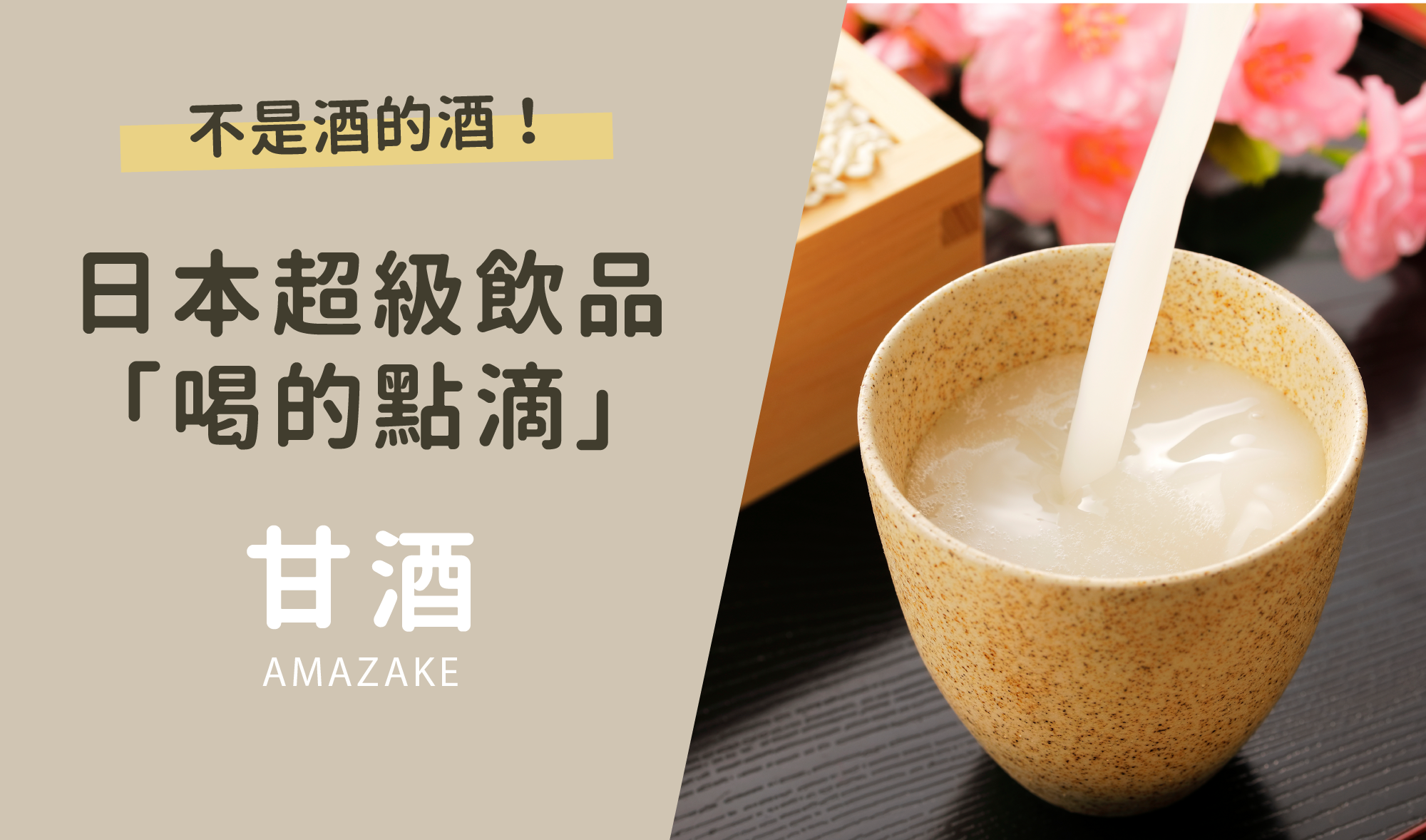
Not alcohol, but sake?! A super Japanese drink – nutritious amazake!

Amazake (あまざけ|Amazake)
Have you ever seen stalls selling amazake when you visit Japanese shrines? Drinking a warm cup of amazake on a cold winter's day is incredibly comforting! Many people see "sake" and assume amazake is similar to sake, but that's a misconception! Amazake is a traditional fermented beverage with a long history in Japan. It contains no alcohol (even sake lees amazake contains only trace amounts of alcohol), and commercially available amazake is classified as a refreshing drink, making it a safe and enjoyable traditional beverage.

Amazake is made from rice, rice koji, or sake lees. The ingredients are simple, but it's rich in nutrients, including glucose, amino acids, and B vitamins. It's believed to have effects such as relieving fatigue, improving gut health, and skin whitening. Its nutritional composition is similar to an IV drip, hence the name "drinkable IV drip" (饮む点滴). It's also known as "drinkable beauty essence" (饮む美容液) due to its beauty and nourishing properties, making it very popular among Japanese women. In Japanese Shintoism, rice was a gift from the gods, considered an essential food for life. Therefore, amazake, made from rice, has long been regarded as a drink that brings good fortune and blessings.
The history of amazuri
Amazake was also known as "kosake" or "hitoyozake" in ancient times. Its history can be traced back to the Kofun period (mid-3rd to 7th century AD). The Amanotama-sake recorded in the historical book Nihon Shoki is considered to be the prototype of amazake, which was used for offerings.

By the Edo period (1603-1868), amazake had become a popular summer beverage among the common people. While modern amazake is often served warm, giving the impression of being a winter drink, people in the Edo period would drink it chilled to restore energy and prevent heatstroke. Therefore, in haiku culture, amazake is a seasonal word for summer. To protect the health of the people, the Edo shogunate limited the price of amazake, maintaining an affordable price that made it easily accessible to men, women, and children of all ages, further popularizing it. Many amazake stalls appeared at that time, and some samurai even made amazake to earn extra money.
Rice koji amazake and sake lees amazake

Amazake is divided into two main categories based on its raw materials and production methods: one is "rice koji amazake" made from "rice koji", and the other is "sake koji amazake" made from "sake lees".

Koji amake (Japanese: koji amake, koji amake)
Made with rice, rice koji, and water, the rice is cooked, then rice koji is added and fermented at around 60 degrees Celsius. During fermentation, starch breaks down into glucose, releasing its natural sweetness. Furthermore, the fermentation process significantly increases vitamin levels. Rice koji amazake is alcohol-free, making it safe for children and pregnant women to drink.

In the production of rice koji, koji mold is introduced into white rice for fermentation. Rice koji is an important part of Japanese food culture; amazake, sake, mirin, and miso are all fermented with rice koji. "Kiji" is another name for koji, belonging to the Japanese kanji system. During koji fermentation, clumps of mycelium grow on the rice grains, resembling blooming white flowers, hence the beautiful name.
Main nutritional components of rice koji:
- glucose
- Oligosaccharides
- Kojic acid
- Vitamin B complex
- folic acid
- pantothenic acid
- Biotin
- Nicotinic acid

Sake lees amazake (Japanese: 酒棼甘酒)
It is made with sugar, sake lees, and water. The sake lees are dissolved in water, and then sugar is added. Because it is produced during the sake-making process, it contains the aroma and flavor of Japanese sake, but it also contains trace amounts of alcohol (less than 1%), making it unsuitable for children and pregnant women. Please be aware of this before drinking it.

Sake lees are a byproduct of the sake-making process. Rice and rice koji are fermented to make maltose, and sake is pressed out from the maltose. The solid residue left after pressing is sake lees. Sake lees undergo multiple fermentations and are rich in nutrients.
Main nutrients in lees:
- protein
- carbohydrates
- Dietary fiber
- Vitamins
- organic acids
- minerals
- amino acids
- β-glucan

Amazake, made from a mixture of rice koji and sake lees, is also available on the market, and comes in various flavors such as orange and yuzu. You can find amazake in convenience stores and vending machines throughout Japan!
The effects of amazake

Improve gut health
Amazing wine contains dietary fiber, oligosaccharides, and beneficial bacteria (active probiotics), which are essential dietary fibers for improving the intestinal environment. Regular consumption of amazing wine can promote bowel movements and prevent constipation.
Provides brain energy
The only nutrient that can provide energy to the brain is glucose. Amazake (rice koji sake) is rich in glucose, hence its nickname "drinkable IV drip." Drinking it in the morning can boost blood sugar levels, energizing the brain and body and improving concentration! Drinking amazake after exercise can also quickly replenish energy.
Eliminate fatigue
Rice koji amazake contains B vitamins, metabolites of koji mold, as well as dietary fiber, minerals, and citric acid. B vitamins are important nutrients that can relieve fatigue. In recent years, due to its fatigue-relieving effects, rice koji amazake has been studied for its potential use as a functional sports food to help athletes reduce fatigue.
Beauty effect
Rice koji amazake contains a relatively high amount of biotin, including B vitamins, which can help improve the metabolism of skin and mucous membranes, resulting in significant skin-beautifying, whitening, and hair-enhancing effects. Sake lees amazake also has the effect of improving skin quality.
Preventing obesity
Sake lees contain resistant proteins that effectively eliminate lipids and oils, preventing obesity and resulting in significant weight loss.
The glucose in rice wine can raise blood sugar levels, and consuming just a little rice wine can create a feeling of fullness, making it a good choice for those who are trying to lose weight.
Amazing wine also contains various vitamins and amino acids, especially rich in B vitamins, which are evenly absorbed by the body, thus earning it the title of a superfood. Amazing wine contains essential amino acids, nutrients that cannot be synthesized in the body and can only be obtained from food, helping to maintain the health of vital organs, muscles, and other parts of the body. Furthermore, it can improve blood flow, relieve cold hands and feet, and help warm the body.

Although amazon is considered a healthy beverage, it is relatively high in calories and sugar. The recommended serving size is 50-120mL per serving, and approximately 200mL per day is sufficient to obtain the necessary nutrients.
Drinking a glass of sweet sake in the morning and before work or study after lunch can help absorb glucose, raise blood sugar levels, and activate the brain, making you more alert in the morning and improving work and study efficiency. One glass provides even nutrition and hydration, and also provides a feeling of fullness, making it a good choice for breakfast or afternoon tea during busy times.
Drinking a glass in the evening can relieve the fatigue accumulated throughout the day. For those who have difficulty falling asleep at night, warm amazake can relax the mind and body, raise body temperature, and achieve a better sleep-inducing effect.
New Release! Yuzu-Flavored Amazake

Our store currently sells Koya's Rice Koji Amazake (米鳴甘酒), which is alcohol-free and made with Japanese rice, rice koji, and water using traditional methods. It contains no added sugar or sweeteners, allowing you to experience 100% of the natural sweetness from white rice. Suitable for everyone from children to the elderly!
In addition to the original flavor, Koya recently launched a new flavor—Yuzu-flavored Amazake! The sweet Amazake is infused with slightly sour Yuzu juice, making it delicious and filling. It's also very easy for first-time Amazake drinkers to enjoy!

In addition, the black sweet sake produced by Chung-Hyo Sake Brewery is also worth trying! Black sweet sake belongs to... Rice koji amazake is made with black koji, a type of koji unique to Okinawa. Its appeal lies in the fact that it contains no added sugar, allowing you to experience 100% of the refreshing sweetness and slightly acidic flavor from the rice and black koji. This amazake is non-alcoholic, can be enjoyed hot or cold, and is the only amazake in Okinawa that contains black koji.
The citric acid in black yeast helps eliminate fatigue, replenish energy, and cheer you up for your busy life!

%0A%0A%20Have%20you%20ever%20seen%20stalls%20selling%20amazake%20when%20you%20visit%20Japanese%20shrines?%20Drinking%20a%20warm%20cup%20of%20amazake%20on%20a%20cold%20winter's%20day%20is%20incredibly%20comforting!%20Many%20people%20se...)
Leave a comment
This site is protected by hCaptcha and the hCaptcha Privacy Policy and Terms of Service apply.